Baku Consensus: COP29 Ushers in a New Era for Global Climate Finance
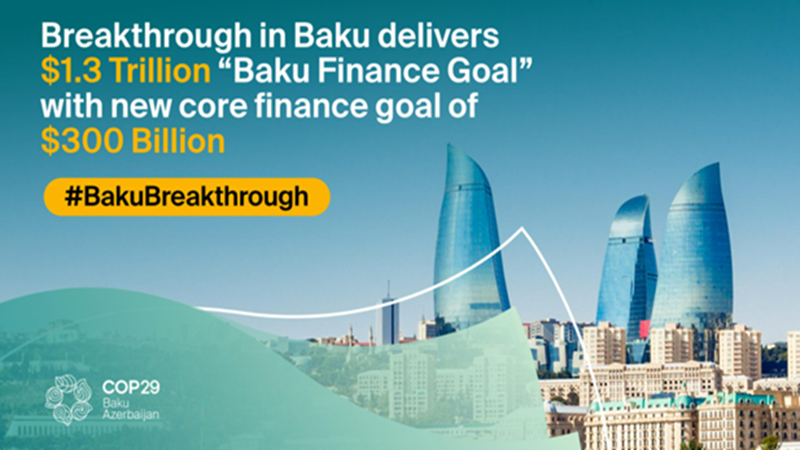
After two weeks of intense negotiations in Baku, Azerbaijan, the 29th Conference of the Parties (COP29) to the UN Framework Convention on Climate Change (UNFCCC) adopted 20 decisions, including the "Baku Climate Unity Pact," setting new targets and directions for global climate action.
A New Chapter for Global Climate Action
In the early morning of November 24 local time, after more than 30 hours of extended negotiations, COP29 concluded in Baku, the capital of Azerbaijan. Following two weeks of talks, the conference adopted over 20 decisions, resulting in a balanced package of outcomes known as the "Baku Climate Unity Pact."
The Baku Climate Unity Pact
The adopted outcomes include a new climate finance goal and related arrangements for the post-2025 period. Of particular note, the conference established a goal for developed countries to provide at least $300 billion per year by 2035, as well as a broader climate finance mobilization target of at least $1.3 trillion per year. These funds are intended to support climate action in developing countries.
Additionally, the conference finalized the operational rules for the International Carbon Market Mechanism under Article 6 of the Paris Agreement, marking a significant step forward for the global carbon market.
China‘s Voice: Developed Countries’ Funding Obligations Must Be Clarified
The Chinese delegation played a constructive role throughout the conference, fully participating in negotiations on various agenda items. Zhao Yingmin, head of the Chinese delegation and Vice Minister of Ecology and Environment, emphasized at the closing plenary that the funding obligations of developed countries must be further clarified to meet the needs of developing countries.
Upholding Multilateralism and Ensuring Non-Backsliding of Action
China called on all parties to uphold multilateralism, adhere to the principle of "common but differentiated responsibilities," and ensure non-backsliding of action on the basis of the Paris Agreement. China will continue to implement its national strategy for actively addressing climate change, pursue its carbon peak and carbon neutrality goals, and extensively carry out South-South cooperation on climate change, contributing to global green, low-carbon, climate-resilient, and sustainable development.
The outcomes of COP29 mark a new starting point for global climate action. With the establishment of new climate finance targets and the refinement of the international carbon market mechanism, there is reason to believe that global climate action will become more robust, contributing to the achievement of the Paris Agreement‘s goals and global sustainable development.